Auckland Harbour Bridge · An independent public consultation
TWO FLAGS. ONE CHOICE.
If another flag is to fly permanently alongside New Zealand's flag on the Auckland Harbour Bridge, which should it be: Te Kara or the Tino Rangatiratanga flag?
An informed choice starts with the history of each flag. Explore the options below. Select a flag, enter your details, and confirm your vote using the email verification link.
1834 · United Tribes
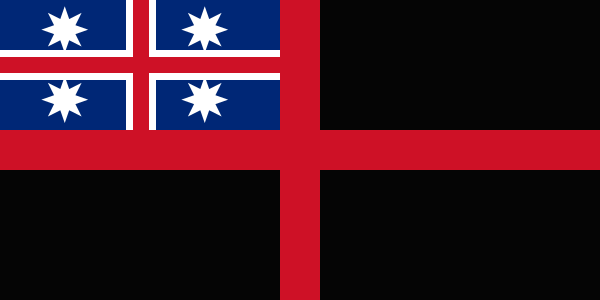
Te Kara
Modern black-field interpretation; not the historically documented 1834 colour specification.
Selected by northern rangatira in 1834. Associated with He Wakaputanga, the 1835 Declaration of Independence, and early international recognition of the United Tribes flag.
1990 · Māori sovereignty movement
Tino Rangatiratanga
Created through the Te Kawariki initiative in 1989 and unveiled in 1990. A contemporary expression of Māori identity, self-determination and rangatiratanga.
Historical flag artwork sourced from Wikimedia Commons; black-field variant illustrated for this consultation. Historical information does not constitute endorsement by any organisation.
Historical record
Two flags. Two moments in our history.
Te Kara and the Tino Rangatiratanga flag have different origins and histories. The sources below distinguish the choice made by rangatira in 1834, He Wakaputanga in 1835, and the Government's 2009 consultation.
20 March 1834 · 28 October 1835
Te Kara and He Wakaputanga
At Waitangi, 25 northern rangatira selected a flag from three designs on 20 March 1834. Following alterations, King William IV approved the design, and Admiralty instructions recognised it as New Zealand's flag. It became known as the United Tribes flag.
In 1835, rangatira signed He Wakaputanga, asserting their collective authority. The Declaration referred to the King's acknowledgment of their flag. The two events are related, but selecting the flag and signing the Declaration were distinct acts.
Te Kawariki members developed the Tino Rangatiratanga flag in 1989, and the flag was unveiled at Waitangi on 6 February 1990. It became an expression of Māori identity and rangatiratanga.
In 2009, the Government held 21 public hui and invited submissions about the preferred national Māori flag. Four flags were considered, including Te Kara. More than 1,200 submissions were received, and 80.1% favoured the Tino Rangatiratanga flag. Cabinet recognised it as the preferred national Māori flag on 14 December 2009.
What the 2009 decision means: The result describes preferences among consultation submissions, not a binding nationwide vote. Cabinet's recognition of the preferred national Māori flag did not itself adjudicate the constitutional status of He Wakaputanga or make a decision about a permanent two-flag display on the Auckland Harbour Bridge. Participants may consider both histories before choosing.
Historical records use different spellings, including “He Wakaputanga”. This consultation uses “He Wakaputanga” in its editorial text while preserving original source titles where relevant.
Votes are counted only after email confirmation. Email verification, duplicate checks and rate limits reduce abuse, although one verified address does not guarantee one unique person.
Separate signatures
A flag preference and a petition signature are two different actions. The 100,000-signature figure is a target, not a current count or a prediction.
Evidence for decision-makers
The consultation will report results for both flags. An external poll does not itself authorise bridge flag changes or replace official parliamentary petition procedures.